On the morning of April 23, 2026, smoke started rising from the bluffs west of Arroyo Burro Beach, thick enough that a wildfire-monitoring camera stationed at UC Santa Barbara caught the plumes on record from miles up the coast. A resident named David Sabey caught the source on video: a fire smoldering inside an underground PVC drainage pipe buried in the cliffside. Santa Barbara County Fire crews responded that morning, worked the burn through the afternoon, and left with no structures threatened. Within 48 hours, five different news outlets had run some version of the same headline: the Hope Ranch volcano was back.
If you've lived here more than a few years, you already know it isn't a volcano. What you may not know is how often this actually happens, and how much the coverage pattern misleads people about it.
What Actually Burned This Time
The April incident had a detail that set it apart from most of the volcano's history. County Fire spokesperson Karen Cruz-Orduña described it to Noozhawk as a natural solfatara, a vent in the coastal bluffs that releases heat, steam, and sulfurous gases from underlying rock formations. That part is textbook. What wasn't textbook was the fuel source: this time the heat found its way into a manmade PVC drainage pipe embedded in the cliff, and the pipe itself caught fire and burned. It's a small but telling wrinkle. A geological process that predates the neighborhood by centuries is now interacting with the infrastructure homeowners have installed on top of it, the same drainage lines that carry runoff off these bluff-top lots toward the ocean.
Spokesperson Michael Gray put it plainly when asked about the recurring nickname: "It's something I've always just accepted as the Hope Ranch volcano. We monitor it until it stops." No structures were threatened. Crews stayed on scene to make sure the fire didn't spread into dry vegetation, and then they left.
Not a Volcano, a Slow Chemical Reaction
The mechanism has been explained the same way for years, most recently by UC Santa Barbara geochemistry professor David Valentine, who told KSBY that the fires trace back to the same underground processes that produce the region's offshore oil. Iron and sulfur minerals sit unstable underground until erosion or a landslide exposes them to oxygen. The reaction is exothermic, meaning it generates its own heat, and if there's enough dry organic material nearby, that heat is enough to ignite it. Valentine also offered a detail that reframes the whole phenomenon historically: early Spanish explorers sailing along this coastline reportedly mistook the smoke for campfires and assumed the shoreline was more densely inhabited than it was.
That history goes back further than most residents realize. In 1795, California governor Pedro Fages wrote a description of the site that reads almost identically to the fire reports filed 231 years later: "Throughout this site, the ground is so hot that one cannot approach it. It burns continuously in more than 30 places, like geysers that exude dense smoke. From its stench it appears to be from sulfur." A similar solfatara turned up at Rincon in 1835, and by the 1880s that one was reportedly throwing flames ten feet high and flinging rocks before it eventually went dormant on its own.
Hope Ranch's version has never been that dramatic in the modern era, but it hasn't always been this quiet either. In the 1920s, the vent reportedly produced hot coals that glowed orange at night, drawing enough curiosity seekers and complaints about the smell that a few nearby residents ran a water pipe to the fissure in a failed attempt to put it out for good. In October 2006, the fire returned in a much bigger way. A blaze broke out below Marina Drive and burned for roughly two weeks despite repeated water drops from a county helicopter. Homeowners living directly above it, including one resident who had lived in his house for nine years at the time, described glowing red fissures in the cliff face and pungent odors similar to hot tar. County officials eventually ran sprinklers around the clock, and the resident reported the smoke had dropped by an estimated 95 percent within days. It took a genuine, sustained firefighting effort to quiet what usually announces itself for an afternoon and goes back to sleep.
The Real Frequency
Here's the part the news cycle tends to flatten. Every time the vent flares up enough to send visible smoke over the neighborhood, it gets covered as a return, a resurrection, a comeback after some quiet interval. The Independent's own archive treats each appearance that way: 2017, then 2019, then December 2020, then July 2021, then April 2026, each one written up as though the volcano had been dormant since the last headline.
County fire officials have said otherwise. In 2021, county fire officials told KSBY that the phenomenon occurs about once a month, though the vent is sometimes dormant for longer stretches. That single line matters more than any of the individual fire reports. It means the gap between news stories isn't the actual gap between events. Most months, the solfatara vents heat and gas without finding enough fuel to ignite anything visible, or it smolders in a spot too small or too remote to draw a call to dispatch. The moments that make the news are the ones where wind, dry brush, and enough oxygen line up at once. In the modern record alone, fires large enough to draw a county response have been documented in:
- 2017
- 2019
- December 2020
- July 2021
- April 2026, ignited through an underground drainage pipe
That's five reported fires across nine years, on top of the far more dramatic 1920s glowing-coal period and the two-week 2006 burn below Marina Drive. Five incidents in nine years looks rare on paper. A monthly baseline, most of it invisible, tells a different story about what's actually happening under that stretch of bluff on an ordinary week.
Where It Sits, and What To Do If You Notice It
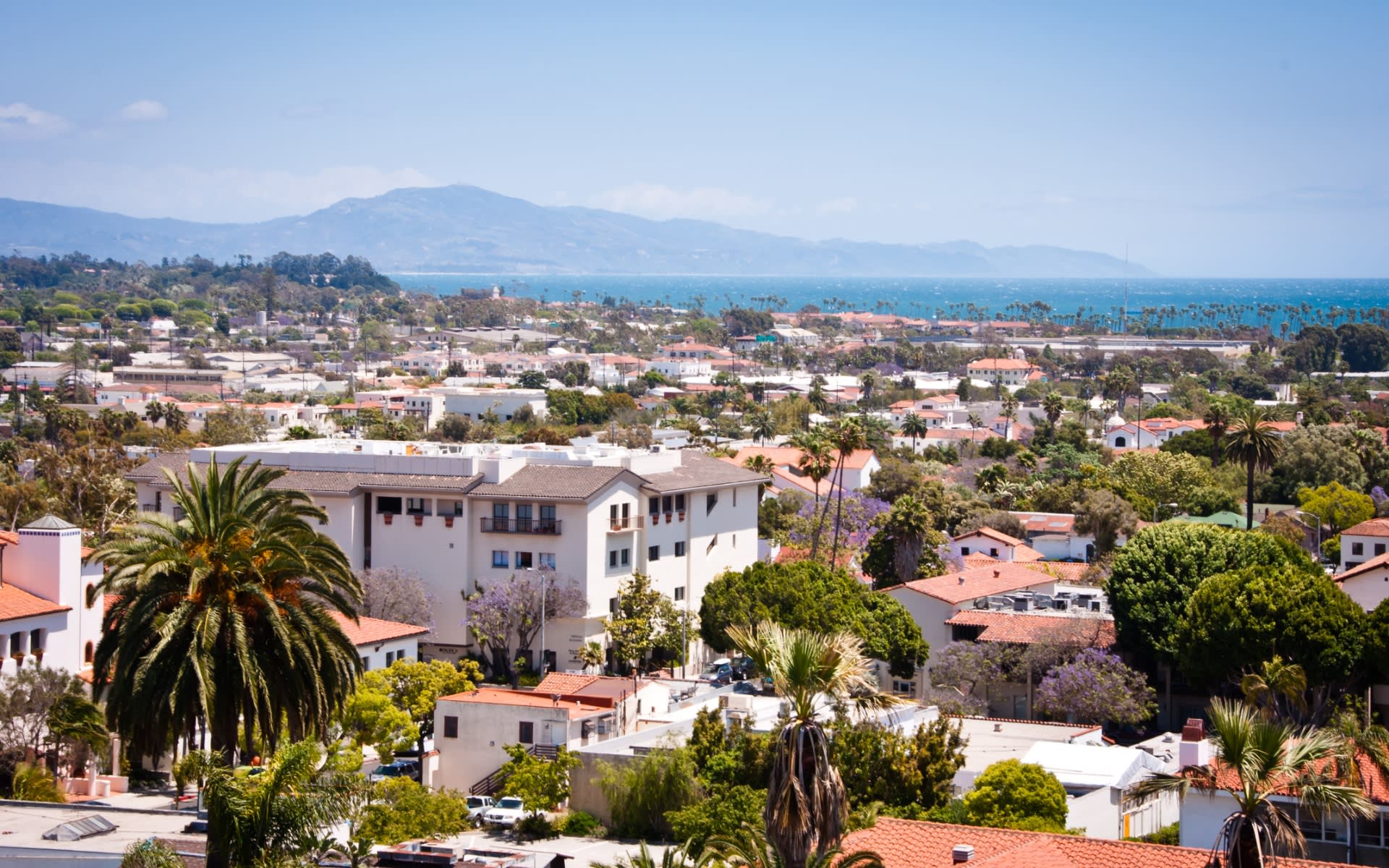
The site itself is consistent across every account: on the coastal bluffs between Hope Ranch Beach and Arroyo Burro Beach, roughly a mile to a mile and a quarter west of Arroyo Burro, in the vicinity of Marina Drive. It's a stretch plenty of residents pass on a bluff walk or a ride out toward More Mesa, and it's close enough to the water that the smell, when it's active, tends to carry on the onshore breeze rather than settle.
If you catch a whiff of something like tar or hot asphalt on that stretch, or see thin smoke rising from a crack in the bluff face, it's worth a call to the county's non-emergency fire line rather than an assumption that someone already reported it. Crews don't treat these as high-alarm events, but they do want to know, especially in August, when the hillside grasses are at their driest and any brush the vent manages to ignite has the best chance of spreading before anyone notices.
Part of Living on This Stretch of Coast
None of this makes Hope Ranch's bluffs less remarkable. It makes them older and stranger than the postcard version, a piece of coastline that's been quietly smoking on and off since before the United States existed, noticed by a Spanish governor, feared by 1920s homeowners, and now occasionally interacting with the drainage pipe under someone's driveway. Living here means living with that history at the edge of your property line, whether or not it ever produces more than a curious smell on a summer walk.
If you already call Hope Ranch home and want to talk through what a specific stretch of bluff means for your property, or you're simply curious what else the neighborhood's geology and history might explain, the team at Grubb Campbell Real Estate has spent years working this exact coastline. Schedule a confidential consultation any time you'd like to talk it through.