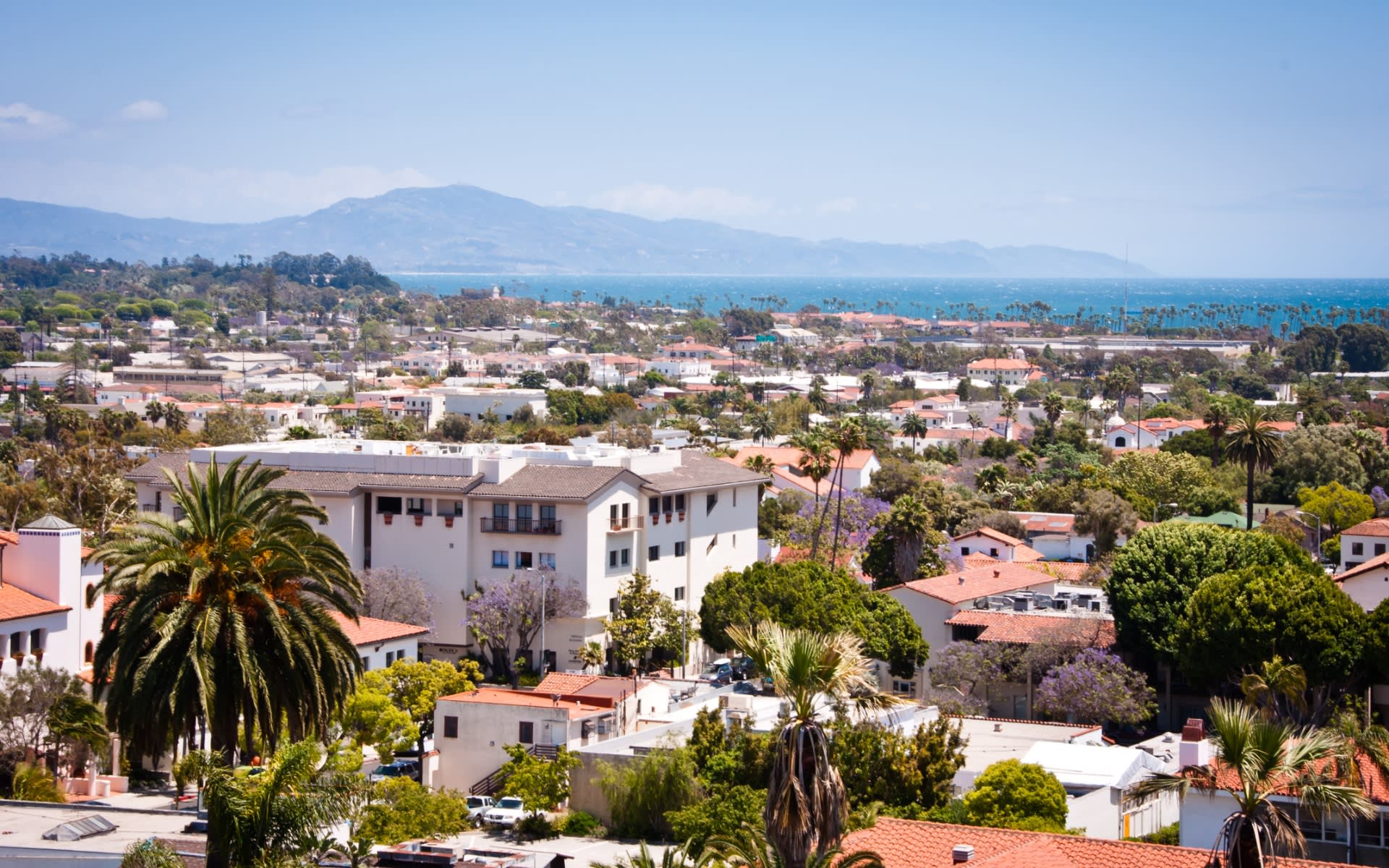
If you have followed the Mesa's local news this summer, you have probably read two stories that seemed unrelated. One was about a single house on Edgewater Way that the City Council argued over for hours before approving it anyway. The other was about a nonprofit trying to raise tens of millions of dollars to buy an open meadow most of us have hiked, biked, or walked a dog through without ever wondering who owns it. They ran in different sections of different publications, weeks apart, and neither story mentioned the other.
They are the same argument. One is happening on a lot that is already built, where the city has to decide what "compatible with the neighborhood" means after a house has partially fallen into the ocean. The other is happening on 265 acres that have never been built on at all, where a citizens' group is trying to buy the land outright before anyone has to have that argument a second time. Understanding both cases together tells you something neither story tells you alone: the Mesa does not currently have a rule for what happens at its own edge, and everyone involved knows it.
The House That Reopened an Old Argument
The property at 2339 Edgewater Way had a rough few years before it ever reached the City Council. In the winter of 2023, a slope failure collapsed a large portion of the house and the bluff it sat on. The owners stabilized the site, then applied to demolish what remained and build a new two-story house with a basement, a detached two-car garage with an ADU above it, a pool and spa, and new landscaping. The Planning Commission approved the project in March 2026 on a 3-1 vote. A neighbor appealed.
The appeal went to the full City Council on July 28, and the vote split 4-2 to deny it, which let the project move forward. Councilmembers Kristen Sneddon and Wendy Santamaria voted against denying the appeal, citing bluff safety concerns. Councilman Mike Jordan abstained because he lives near the house. The rest of the disagreement was not really about whether this particular house should get built. It was about whether the city has any consistent way to decide.
The appellant, a neighbor named Alexandra Hack, argued the Planning Commission had approved the project using a slope calculation of 25 percent when the actual grade was closer to 31 percent. She raised privacy concerns and questions about building height and fire code compliance. The applicant's land-use consultant, Jarrett Gorin of Vanguard Planning, called the appeal's claims erroneous. Santa Barbara Fire Marshal Ryan DiGuilio confirmed emergency access would work for both properties, with a 16-foot driveway wide enough for fire hoses to reach the far edge of the lot. The new house, as approved, sits 38 feet back from the bluff's edge and will stand about 25 feet tall.
What the Council Actually Admitted
None of that resolved the deeper disagreement. Councilmember Kristen Sneddon pointed out that the very neighbor appealing the project also owns a large bluff-side home of her own.
"Neighborhood compatibility is a slippery slope. I don't think the appellant's property should be as big as it is with the sensitivity of these bluffs."
Another neighbor, Kelly Boker, told the council the project's scale and the removal of privacy foliage would be invasive to her own home. Councilmember Meagan Harmon, who called for policy reform on bluff development, put it plainly: she hoped there was "a possibility for healing in this neighborhood." Councilman Eric Friedman said he understood the neighbors' concerns but didn't feel the council had the technical grounds to override the Planning Commission's approval of professional geotechnical findings.
What emerged from that meeting was not a decision about one house. It was an admission that the city is making these calls one parcel at a time, with no shared standard for what "too big" or "too close to the edge" actually means on a bluff that has already proven it can fail.
Two Bluffs, Same Question
| 2339 Edgewater Way | More Mesa | |
|---|---|---|
| Status | Single lot, previously built, partially collapsed 2023 | 265 privately owned acres, never developed |
| Mechanism | Case-by-case permit appeal | Outright purchase campaign |
| Price | Not disclosed publicly | Listed at $65 million |
| Decision-maker | Santa Barbara City Council | More Mesa Preservation Coalition, private buyers |
| Resolved as of August 2026 | Yes, 4-2 vote to allow construction | No, fundraising ongoing |
The Other Bluff, Not Yet Built On
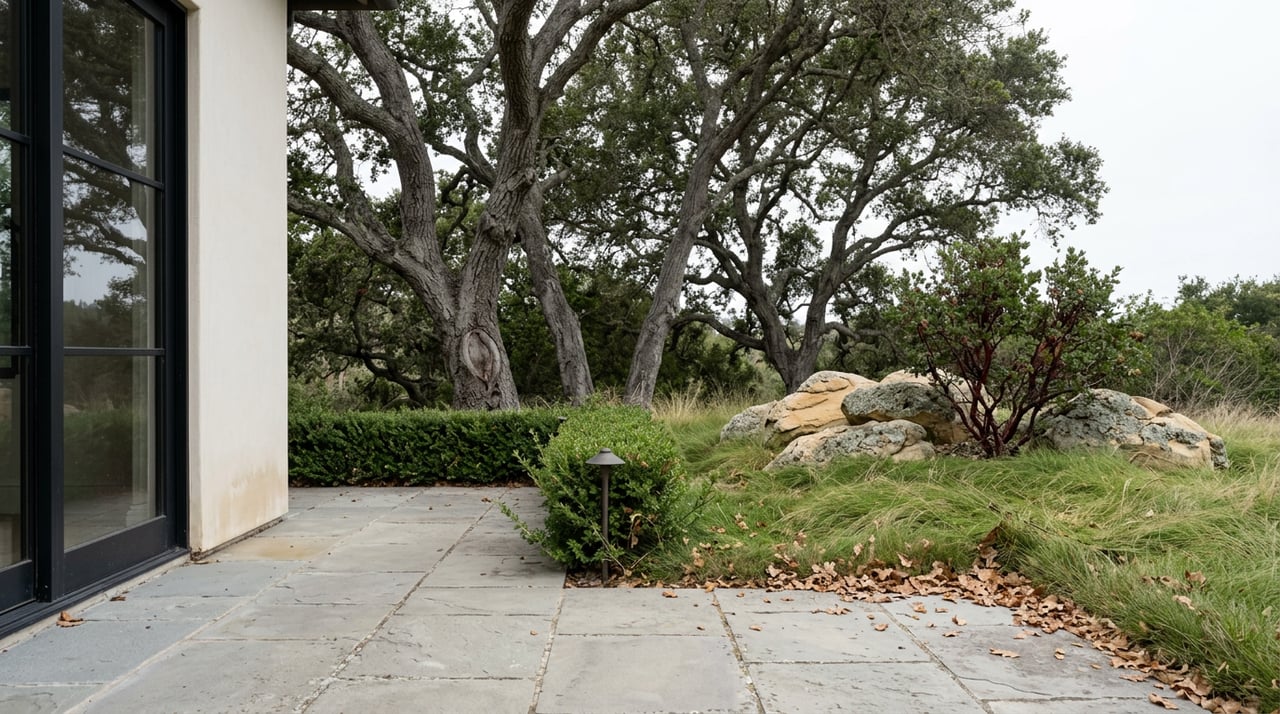
A few miles west, the same anxiety about the city's bluffs is playing out in a completely different register. More Mesa is roughly 325 acres of oak woodland, coastal grassland, and undeveloped blufftop between the Mesa and Hope Ranch. The county owns 54 acres of it, called the More Mesa Open Space. The remaining 265 acres are privately held by a Saudi entity, Khalid Saud Al Shobily LLC, which bought the land in 2012 for about $25 million. It is currently listed for sale at $65 million, more than double what the owner paid thirteen years ago.
In October 2025, the county, the Land Trust for Santa Barbara County, and the More Mesa Preservation Coalition announced the first permanent conservation easement on the property, protecting 36 acres in the northwest corner from any future development. That was real progress, but it covered only the county-owned corner. The bulk of the land, including the entire coastal bluff-top, remains on the open market. Forty acres on the east end are currently zoned for up to 70 homes, close to entrance trails at Puente Drive, Vieja Drive, and Mockingbird Lane.
The Preservation Coalition has spent the better part of a year trying to raise the money to buy the rest before that zoning gets tested. In November 2025, more than 125 supporters gathered at Rincon Brewery to mark the coalition's 25th anniversary and launch the purchase campaign, with proceeds from a special Save More Mesa Blonde Ale going toward the fund. A sold-out benefit concert with the Doublewide Kings at the Lobero Theatre drew about 650 people. In May 2026, the Oak Group, a collective of local plein air painters, mounted a fundraising exhibit at the Faulkner Gallery called Preserve and Cherish, its first show benefiting More Mesa in twelve years. A recreational use survey the coalition commissioned found that more than 90 percent of respondents were very concerned about the possibility of development, and more than half visit the land more than once a week.
Why the Timing Matters
Here is the connection the two stories don't make explicitly, but should. Dan Gira, the Preservation Coalition's vice chair and a retired Santa Barbara County land use planner with 40 years of experience, has said publicly that state housing mandates make More Mesa "a natural target" precisely because it is the largest undeveloped, privately owned coastal parcel left in the area. If the California Coastal Act's protections are weakened at the state level, as some in the preservation community worry they will be, the same case-by-case process that just played out over one collapsed house on Edgewater Way could end up applying to 40 acres of raw blufftop instead of a single lot.
That is the real stakes of the Edgewater Way vote. It wasn't really about whether one family could rebuild their home. It was a preview of the standard, or lack of one, that will apply the next time a much bigger decision about the Mesa's edge comes before the same council. The Preservation Coalition is trying to make sure that decision never has to happen at all, by buying the land before it becomes a permit application.
The Garden Keeps Growing While the Argument Continues
None of this touches the parts of the Mesa that don't sit on a bluff. Mesa Harmony Garden, tucked on church-owned land at the corner of Meigs Road and Dolores Drive, is heading into its sixteenth year of turning two-thirds of an acre into a working food forest. Volunteers led by Hugh Kelly and Pam Lombardo show up most Saturday mornings from nine to noon, and the garden has averaged about 1,200 pounds of donated produce a year for the Foodbank of Santa Barbara County, all of it grown by people who never take any of it home. It started in 2010 when an SBCC environmental science professor asked Holy Cross Parish if he could use an empty lot, and it has run largely unchanged since.
A short walk away, the Mesa Artists Studio Tour has spent more than two decades opening working studios across the neighborhood to the public each fall, typically the first weekend of November. The SB Mesa Neighborhood Association keeps its own newsletter and meeting schedule, mostly focused on the ordinary business of beautifying streets and connecting residents with city staff, not on the bluff fights. That's worth noticing. The land-use argument over Edgewater Way and the fundraising push for More Mesa are the loudest things happening on the Mesa right now, but they are not the only things happening, and the neighborhood's daily rhythms haven't changed shape around them.
What has changed is the sense that the city's blufftop rulebook is being written in real time, one appeal and one fundraiser at a time. Whether that rulebook ends up protecting the next undeveloped bluff or simply approving whatever a geotechnical report can justify is still an open question, and it's one worth watching closely if you live here.
If you're weighing what any of this means for a property on or near the Mesa's bluffs, Grubb Campbell Real Estate has spent years working through exactly these kinds of local complexities with clients across Santa Barbara County. Schedule a Confidential Consultation to talk through what you're seeing in your own corner of the neighborhood.